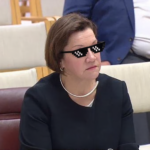
On 4 September 2026, something peculiar happened during a public hearing of an Australian Senate committee. Celia Perkins, a deputy secretary at the Department of Defence, ended her opening statement by noting that the officials present were willing to answer questions, but did not consent to their evidence being reposted on social media or their likenesses being reproduced outside the parliamentary setting. The committee declined the request. The proceedings were public, and public evidence could not simply be withdrawn from public circulation once it became inconvenient. What initially looked like an unusual intervention by one department soon turned out to belong to a broader discussion. Australia’s Secretaries Board, which brings together the heads of federal government departments, had raised similar concerns with the Parliamentary Joint Committee on Parliamentary Standards. Its submission warned that excerpts from committee hearings could be stripped of context and circulated online in ways that exposed officials to “ridicule, hostility or abuse”. The proposed response was not to make parliamentary proceedings secret, but to exert greater control over what happened to their audiovisual material after publication. This is what might be called memefiltering: the attempt by an institution to regulate the secondary life of its public output […]
Continue reading